A Listing Page Takes Four Seconds to Load on Mobile, and Most Buyers Are Gone Before the Photos Appear.
A listing page that takes four seconds to load on mobile loses most buyers before the photos appear. Learn the common causes of slow loading and the practical steps that help Australian real estate pages keep more visitors and generate better enquiries.
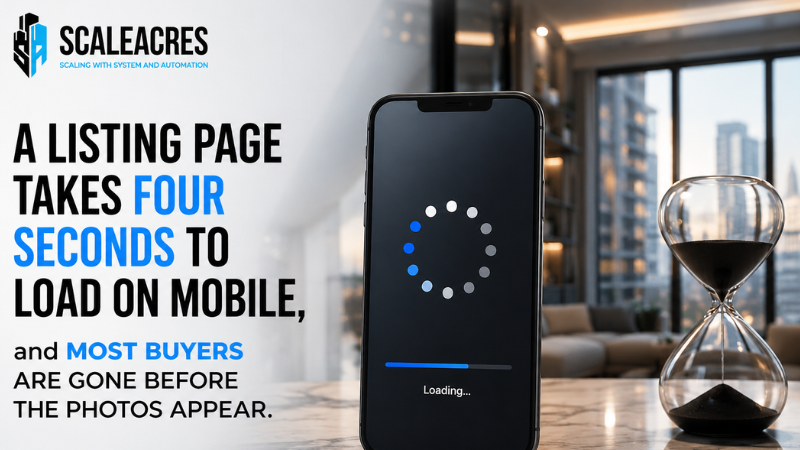

Many real estate listing pages in Australia look strong on desktop yet load too slowly on mobile devices. When a page takes four seconds or longer to appear, most buyers leave before the photos or key details show up. This quiet loss of traffic reduces enquiries even when the property itself is appealing. Speed has become a basic requirement for keeping interested buyers on the page. A capable digital marketing company for real estate in Australia helps identify and fix the technical issues that cause slow mobile loading so more visitors stay long enough to consider the property.
Why Mobile Speed Matters So Much
Most property searches in Australia happen on phones. Buyers expect pages to open quickly while they scroll through options. Research and practical experience show that even small delays increase the chance of exit. When photos and information take too long to appear, the buyer simply returns to the search results and opens another listing.
Common effects of slow loading include:
High bounce rates on mobile traffic
Lower time spent viewing the property
Fewer form submissions or calls
Reduced effectiveness of paid traffic that lands on the page
Weaker overall performance signals for search visibility
A delay of four seconds is long enough for many people to lose patience.
Typical Causes of Slow Listing Pages
Several technical factors frequently slow mobile loading:
Large, uncompressed property images
Too many scripts and tracking codes
Heavy page builders or outdated themes
Slow server response times
Lack of proper mobile optimisation
Excess elements that load before the main content
Any one of these issues can push load times beyond what buyers will tolerate.
Practical Steps to Improve Mobile Loading Speed
1. Compress and Optimise Images
Property photos are essential but often oversized. Proper compression and modern formats keep quality high while reducing file size.
2. Prioritise Above the Fold Content
Ensure the most important information and first images load first so buyers see something useful within the first one to two seconds.
3. Reduce Unnecessary Scripts
Limit extra tracking codes, pop ups, and third party tools that add weight without adding clear value on the listing page.
4. Choose Reliable Hosting and Caching
Faster servers and effective caching help pages reach mobile users more quickly across different networks.
5. Test on Real Mobile Devices
Check load times on common phones and connections rather than relying only on desktop tools. Real world conditions reveal problems that lab tests can miss.
6. Monitor Speed Regularly
New images, plugins, or updates can slow a page again. Ongoing checks help maintain performance.
The Difference Faster Pages Make
Listing pages that load quickly on mobile typically see:
More visitors staying to view photos and details
Higher engagement with the property information
Improved conversion from traffic to enquiries
Better use of both organic and paid traffic
Stronger overall results from the same marketing effort
Speed as a Basic Expectation
Buyers do not wait for slow pages. In a competitive Australian market, a four second delay is often enough to send them to the next listing. The property may be excellent, yet the first technical impression decides whether anyone stays to see it.
Slow mobile loading quietly costs enquiries every day. For real estate businesses ready to keep more buyers on the page long enough to view the photos and details, support from an experienced digital marketing company for real estate in Australia can diagnose the causes and implement the practical fixes that improve speed and protect results.

Comments
No comments yet. Be the first to comment!